
Forteresse de Berrye
Nestled in Berrie, at the border of Anjou, Poitou, and Touraine, the Fortress of Berrye is an extraordinary place where heritage and winemaking are intimately intertwined. Designated in its entirety as a Historic Monument, this medieval fortress has overlooked its vineyards since the 12th century. Built on a rocky outcrop...
Everything You Need to Know About the Berrye Fortress
Nestled in Berrie, at the border of Anjou, Poitou, and Touraine, the Fortress of Berrye is an extraordinary place where heritage and winemaking are intimately intertwined. Listed in its entirety as a Historic Monument, this medieval fortress has overlooked its vineyards since the 12th century. Built on a rocky outcrop and surrounded by dry moats, it also houses an extensive network of underground tunnels, cellars, and cave dwellings.
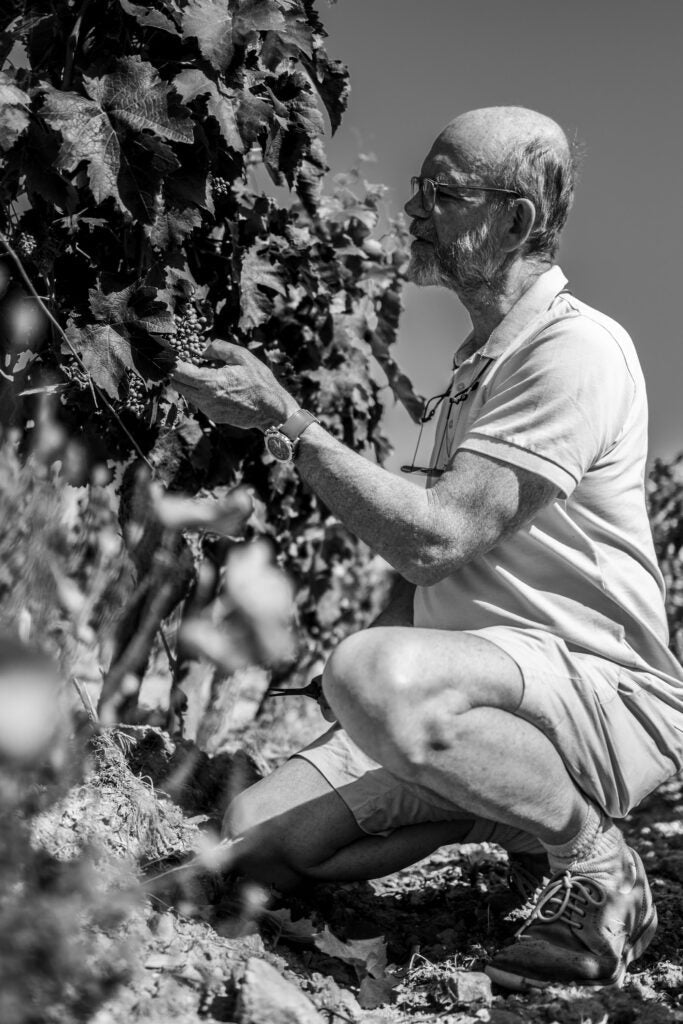
Vines have been cultivated in Berrie for over 800 years. Today, the Forteresse de Berrye vineyard spans 13 hectares around the medieval structure. The estate primarily cultivates three iconic Loire grape varieties: Chenin, Cabernet Franc, and Cabernet Sauvignon. The wines are crafted with respect for this heritage and a particularly unique terroir.
A tuffeau terroir with a distinct character
The vineyard is situated on a hill whose plots—mostly on south- and southwest-facing slopes—rest on Turonian tuffeau bedrock. This chalky limestone, emblematic of the great terroirs of the Saumur region, ensures excellent drainage and contributes to the wines’ freshness, depth, and complexity.
On the surface, the weathering of tuffeau stone gives rise to light-colored sandy-clay soils, known as “terres blanches,” which are mixed in places with flint-rich clay. This diversity of soils contributes to the richness and complexity of the vineyard.
Chenin, in particular, thrives here. The limestone and tuffeau allow it to retain a lovely freshness while developing a generous body, with notes of citrus, white-fleshed fruits, and sometimes quince, complemented by a mineral and salty undertone. Cabernet Franc, meanwhile, benefits from tuffeau’s ability to store and then release heat, promoting even ripening and fine, velvety tannins.
Organic viticulture focused on living organisms
The Berrye Fortress has been officially certified as an organic farm since 2024. But the estate’s approach goes beyond mere certification: the owners place the preservation of life and biodiversity at the heart of their work in the vineyards.
Permaculture, agroforestry, beekeeping, and eco-grazing are all part of this philosophy. The estate is home to eight Ouessant sheep, about ten beehives, and more than 1,500 trees and shrubs planted throughout the plots. The cave galleries and old quarries surrounding the fortress also serve as natural refuges for many species, including bats and birds.
Wines crafted in the heart of the cave galleries
Wine production and aging take place in the estate’s cave cellars, which naturally provide ideal conditions for the wines to mature. La Forteresse de Berrye uses cement tanks and 400-liter barrels, and typically ages its wines for up to two years, depending on the cuvée.
The lineup includes several wines that reflect the terroir of Berrie and the Saumur region: Saumur Blanc, Saumur Rouge, Saumur-Puy-Notre-Dame, Crémant de Loire, as well as some rarer cuvées. The dry whites, made from Chenin, hold a special place in the estate’s production and are crafted to best express the nuances of each vintage and terroir.
Among the estate’s iconic wines, *Cœur pour Cœur* expresses Chenin in a full-bodied, smooth, and mineral-driven style, while *Le Bourg*, from Saumur-Puy-Notre-Dame, showcases a deep, concentrated Cabernet Franc that is built for aging. The estate also offers fresher, fruitier wines, such as Corps pour Corps, a blend of Cabernet Franc and Cabernet Sauvignon aged in concrete tanks.
Preserving our heritage, bringing a region to life
Since 2019, the Colinet family has owned the Fortress and has been carrying out an extensive restoration program on this exceptional building. The first phase of work began in 2022 and focuses in particular on the 12th-century square tower, the southern and eastern ramparts, and several interior spaces. Winemaking is thus an integral part of the site’s rebirth: here, wine is inseparable from the history, the stone, and the surrounding landscape.
La Forteresse de Berrye thus offers a vision of winemaking where heritage, biodiversity, and the expression of the terroir come together. These are vibrant wines with a distinct character, shaped by the tuffeau stone of Berry, the climate of the Loire Valley, and meticulous care in the vineyard and cellar.


