
Château De Lavernette
Located on the border between the Mâconnais and Beaujolais regions, in the towns of Leynes and Chaintré, Château de Lavernette traces its history back to 1596. Formerly owned by the monks of Tournus Abbey, the estate has been in the hands of the same family for more than twelve generations....
1 product

Everything You Need to Know About Château De Lavernette
Located on the border between the Mâconnais and Beaujolais regions, in the municipalities of Leynes and Chaintré, Château de Lavernette traces its history back to 1596. Formerly owned by the monks of Tournus Abbey, the estate has been in the hands of the same family for more than twelve generations. This family tradition continues today with Xavier and Kerrie de Boissieu, who have been at the helm of the vineyard since 2007.
Spanning approximately 13 hectares, the estate benefits from a particularly interesting geological setting, where two distinct wine-growing regions meet. Chardonnay thrives on the limestone soils of the Mâconnais, producing Burgundy whites, Mâcon-Villages, and Pouilly-Fuissé, while Gamay finds its ideal terroir on the granitic soils of the Beaujolais. The estate also produces Saint-Amour, Beaujolais-Villages, Beaujolais-Leynes, and a Crémant de Bourgogne.
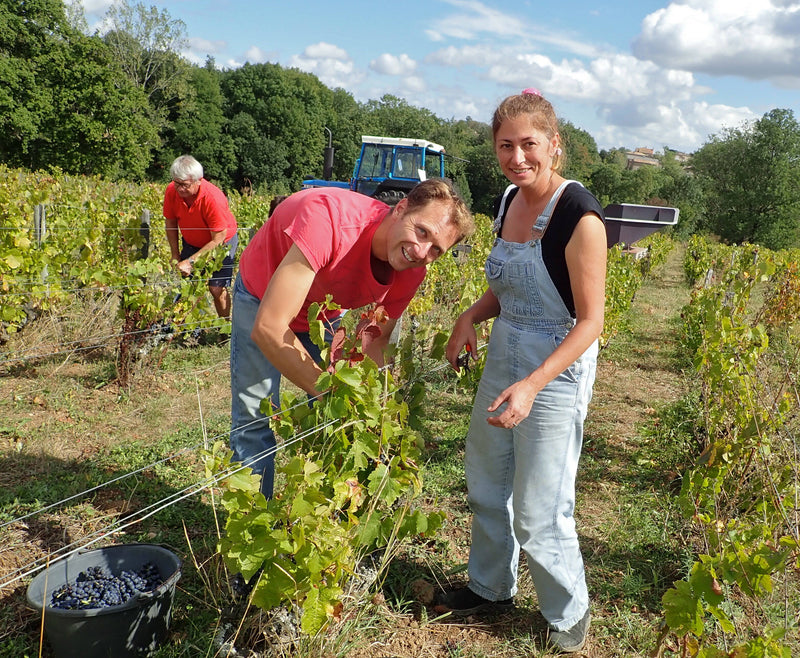
Soil and biodiversity conservation are central to Xavier and Kerrie’s work. The vineyard is managed using organic and biodynamic farming methods and holds Demeter certification. No herbicides or chemical fertilizers are used: the soil is worked mechanically or by hand, and some of the plots are managed with cover crops. This approach aims to preserve soil life and allow each plot to best express its unique character.
In the winery, the same pursuit of precision and expression of the terroir guides the winemaking process. The grapes are harvested by hand, and intervention is kept to a minimum to preserve the fruit and freshness. For the Gamay wines, whole-cluster vinification plays a particularly important role, while the Chardonnays highlight the finesse, tension, and minerality of the limestone terroirs.
Blending family heritage with contemporary winemaking, Château de Lavernette crafts wines that bridge the gap between the Mâconnais and the Beaujolais. On one hand, precise, mineral-driven Chardonnays; on the other, fruity, structured, and elegant Gamays—all driven by a shared commitment: to let the soils, grape varieties, and vintages speak for themselves.


