
Maxime Magnon
Originally from Burgundy, Maxime Magnon settled in 2002 in the wild and rugged landscape of the Hautes Corbières, south of the Corbières region. There, between Villeneuve-les-Corbières, Durban, and Cascastel, he made a forgotten terroir his own, breathing new life into old plots of century-old vines and establishing his name among the leading figures...
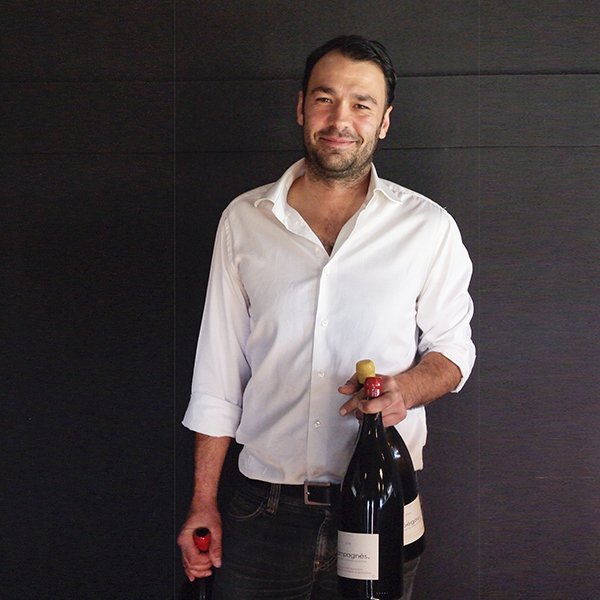


Everything You Need to Know About Maxime Magnon
Originally from Burgundy, Maxime Magnon settled in 2002 in the wild and rugged landscape of the Hautes Corbières, south of Corbières. There, between Villeneuve-les-Corbières, Durban, and Cascastel, he has made a forgotten terroir his own, breathing new life into ancient plots of century-old vines and establishing himself as one of the most exciting figures in the Languedoc’s renaissance.
The estate now covers some fifteen hectares planted on high-altitude soilscomposed of clay, schist, and limestone, which lend the grapes depth, finesse, and minerality. The vineyards are managed with a deep respect for life: certified organic farming, manual work in the plots, and even the integration of animals (sheep, cows) that graze in the winter to naturally enrich the microbial life of the soil.
Having trained under iconic winemakers such as Philippe Valette and Thierry Allemand, Maxime has successfully brought his terroir-driven approach to his new environment. His winemaking follows a natural approach, featuring hand-harvesting, whole-cluster fermentation, native yeasts, very little added sulfur, and often no fining or filtration. This philosophy yields vibrant, precise wines that are deeply rooted in their terroir.
On the palate, the estate’s wines surprise with their unique balance: intense fruitiness, invigorating freshness, and a refined texture that combines elegance and vitality. The reds, often made from Carignan, Grenache, and Cinsault from old vines, offer an expressive aromatic palette, while the whites—made from Grenache Gris, Grenache Blanc, and Carignan Gris—captivate with their liveliness and the salinity typical of the Languedoc.
Maxime Magnon is now regarded as one of the most inspiring winemakers in the Corbières region, transforming this vast and diverse appellation into a noble and unique showcase for natural wine.


